
Marketing Your Translation and Interpretation Business with a Powerful Quote by Warren Buffett

Buy Now Button

Purchase code: Value

As a freelance translator or interpreter, you know that your work goes far beyond simply converting words from one language to another. You’re not just a conduit for communication; you’re a bridge between cultures, a voice for the voiceless, and an integral part of business and international relations. But in a competitive industry, ensuring that your skills are truly valued by potential clients can be challenging.

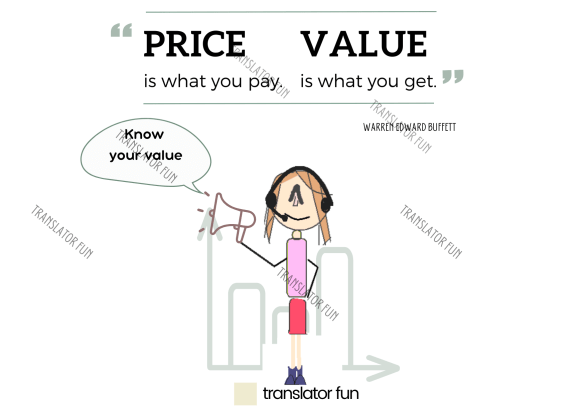
Warren Buffett, one of the world’s most successful investors, once said: “Price is what you pay, value is what you get.” This simple yet profound statement has powerful implications for how you market yourself as a professional translator or interpreter.

Understanding the Difference: Price vs. Value

Let’s break this down. As a freelancer, you might often hear clients focus on price—asking for a discount or shopping around for the “cheapest” option. But here’s the critical distinction you should keep in mind:

  • Price is what you pay. This is the number on the invoice, the sum of your hourly rate or per-word fee.
  • Value is what you get. This is where your expertise, experience, and skills shine through. It’s the precision of your translations, the nuance you bring to your interpretations, and the reliability and cultural understanding you offer.

When clients focus on price alone, they often miss the true value that comes from working with an experienced and highly skilled professional. As a translator or interpreter, your value lies not just in the number of words you translate or the number of hours you work, but in the way you ensure that communication is clear, accurate, and culturally relevant.

Know Your Worth, and Don’t Settle for Less

Too often, translators and interpreters undervalue their services in an attempt to win over clients with lower rates. While being competitive is important, cutting your rates too much can send the wrong message: that your expertise doesn’t deserve to be compensated fairly.

Instead, I encourage you to embrace the mindset of providing value. Understand that your skills are an asset to your clients’ success. Whether you’re translating marketing materials, interpreting at a medical conference, or assisting with legal proceedings, your work profoundly impacts your clients’ ability to communicate effectively and avoid costly misunderstandings.

How Can You Market Your Value?

To successfully market your translation or interpretation business, it’s essential to communicate the value you bring to the table—not just your price. Here are a few strategies to do so:

  1. Craft a Value-Oriented Pitch – Instead of saying, “I charge X per hour,” try positioning yourself as a problem-solver: “I help businesses communicate effectively in [language] markets, ensuring accurate and culturally relevant translations that boost customer engagement.”
  2. Highlight Your Expertise – Share your background, specialized knowledge, and the results you’ve achieved. Have you worked with major brands, translated complex documents, or interpreted for high-stakes events? Let your clients know!
  3. Share Testimonials – Nothing speaks to your value more than satisfied clients. Collect testimonials that emphasize the quality and impact of your work.
  4. Set Clear Boundaries – Make it clear that you won’t compromise on quality for the sake of price. Stand firm in your rates and explain why the value you provide justifies them.
  5. Offer Packages, Not Discounts – Rather than lowering your rates, create service packages that emphasize the comprehensive nature of your work and the long-term benefits clients will receive by working with you.

A Simple Step to Market Your Business

Now that you understand the importance of communicating your value, I want to share a simple yet powerful tool that can help you stand out: the Value Marketing Card. This card allows you to distill your expertise and your unique value proposition into a concise, visually appealing format that you can easily share with potential clients.

By using the Value Marketing Card, you’re not just telling clients what you do; you’re showing them the true value of working with you. This card serves as a reminder that your services are an investment—one that will pay off in clarity, accuracy, and cultural understanding.

Ready to elevate your freelance business and market your true value? Purchase your Value Marketing Card today and start presenting yourself as the high-quality professional that you are. Don’t let clients focus only on price—let them understand the lasting value you bring to the table.

By knowing your worth and using smart marketing tools like the Value Marketing Card, you’ll attract the right clients who are willing to pay for the top-notch services you provide. After all, when clients see your value, the price becomes a secondary consideration.

Take the First Step Today!

Take charge of your business and shift the focus from price to value. Purchase your Value Marketing Card now and start showcasing the incredible skills you bring to every translation and interpretation project.

Your clients deserve the best, and so do you.

*******

Do you like Translator Fun? You can Become a sponsor or have your guest post featured.

Show your support of Translator Fun. Donate now.

Unveiling the Power of Certified Translations: A Guide for Businesses

[Guest Post]

In today’s interconnected global marketplace, effective communication is the key to success. For businesses navigating international waters, the importance of accurate and reliable translations cannot be overstated. This is where certified translations come into play, serving as the linchpin for seamless global interactions.

Understanding the Need for Certification:

Certified translations go beyond mere linguistic conversion; they bear the stamp of approval from a qualified professional attesting to their accuracy. This becomes especially crucial in legal, business, and official documentation where precision is paramount. From contracts and patents to regulatory filings, the consequences of inaccuracies can be far-reaching.

Ensuring Accuracy in Global Ventures:

Imagine the scenario: your company is on the verge of a major international deal, and contracts are being translated. A slight error in translation could lead to misunderstandings, legal complications, and financial losses. Certified translations act as a safety net, providing businesses the assurance that their documents are accurately translated and free from any errors that could jeopardize their ventures.

Navigating Regulatory Compliance:

Different countries have distinct regulatory requirements, and compliance is non-negotiable. Whether you’re expanding your business overseas or dealing with international clients, certified translations ensure that your documents meet the necessary legal standards. This is particularly crucial in industries such as healthcare, finance, and law, where the stakes are high, and adherence to regulations is paramount.

Global Expansion Made Seamless:

For businesses eyeing global expansion, language barriers are a common stumbling block. Certified translations pave the way for a smoother expansion process by ensuring that your marketing materials, product documentation, and other business collateral are accurately translated while maintaining the intended message and brand integrity.

Conclusion:

As businesses continue to explore new horizons, the power of certified translations emerges as a critical factor in their success. By investing in professional translation services backed by certifications, businesses can unlock the full potential of global collaboration, confident that their messages are accurately conveyed across linguistic and cultural boundaries.

******

Do you like Translator Fun? Become a sponsor or have your guest post featured.

Translator open for business

translator open for business

Open for business sign

Buy Now Button Purchase code OB

Hi there! 2020 is already here and Translator Fun wanted to officially kick off the year with this sign translators can use to remind their clients they are willing to accept well-priced projects.

May this 2020 be full of interesting well-paying projects!

Let the fun begin.

Buy Now Button Purchase code OB (once you buy it you will receive it in your inbox with no watermarks).

Send this card to your clients as a reminder you are accepting new translation assignments.

You can see all the available cards here.

Do you like Translator Fun? Become a sponsor and subscribe to Translator Fun’s YouTube channel


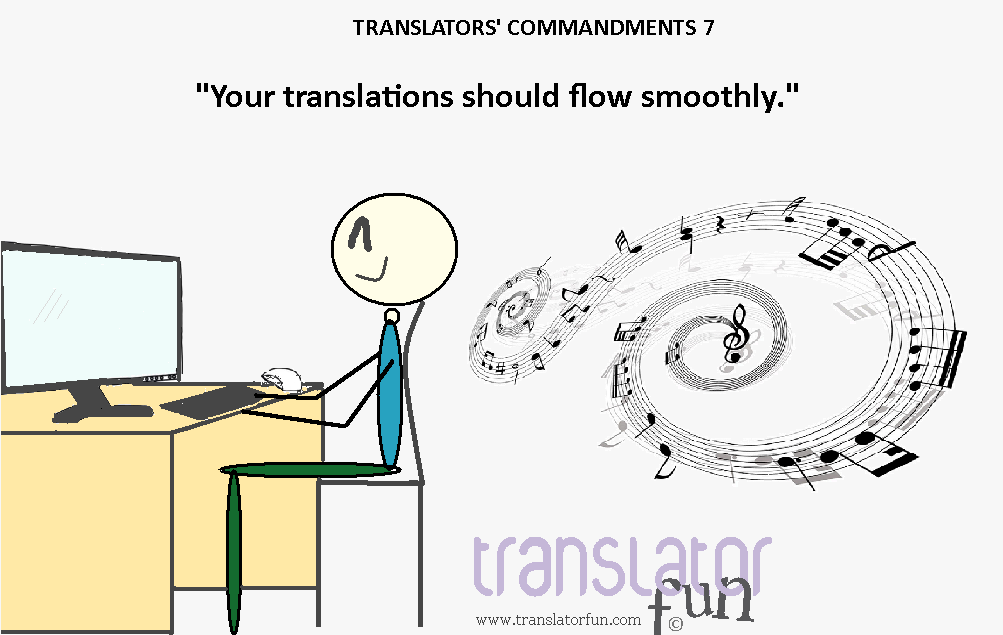
Translators’ commandments #7 – “Your translations should flow smoothly”

"Your translation should flow smoothly" (click on the image to enlarge)

“Your translation should flow smoothly” (click on the image to enlarge)

Also in this series:

A translator at a party

Translators, unite! Who else finds themselves enthusiastically dropping fun language facts to an increasingly bewildered audience at social gatherings? We just can’t keep all that amazing information to ourselves, can we? The trick is finding someone who loves hearing them as much as we love sharing!

Buy Now Button Purchase code: T-party

*******

Do you like Translator Fun?

Become a sponsor or have your guest post featured.

Show your support of Translator Fun. Donate now.

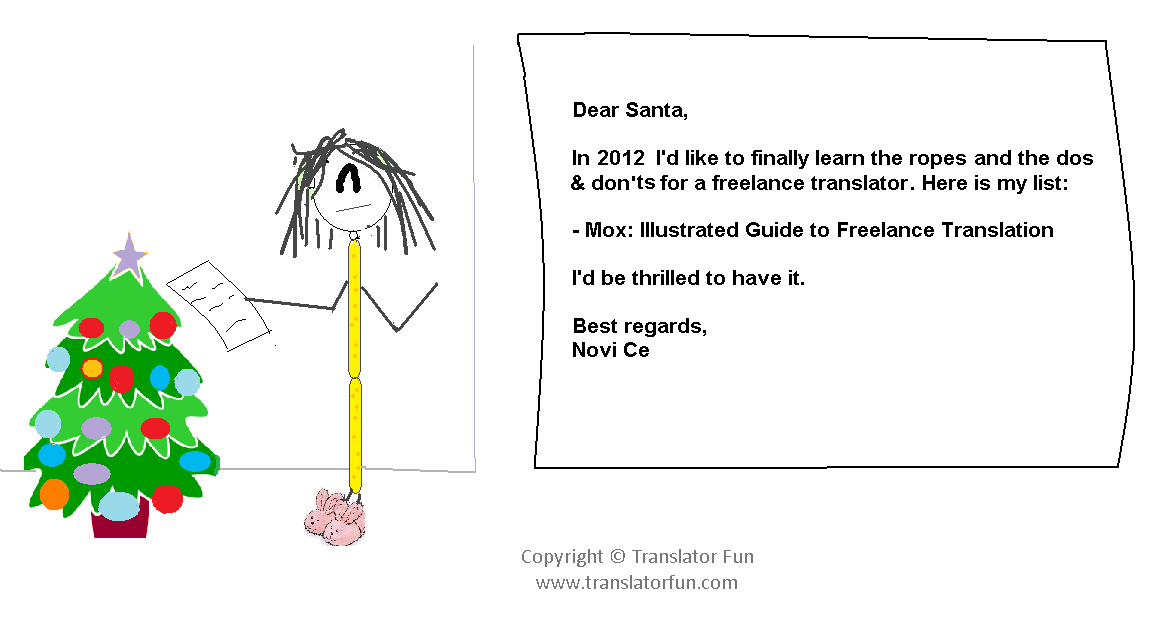
A freelance translator’s letter to Santa

A freelance translator's letter to Santa -- click on the image to enlarge

Also see A freelance translator’s lifestyle

The perfect present for a freelance translator has arrived! Mox: Illustrated Guide to Freelance Translation by Alejandro Moreno-Ramos is a must-have for all the translators out there with a sense of humor who are also willing to take some time to reflect on the actors in the translation industry and the role each of them plays. It is very likely that you will also pick your favorite and least favorite characters in Mox’s book (chances are you will find some similarities between yourself and at least one of them).

Apart from numerous hilarious first-ever-published cartoons the book features thirteen articles by the following renowned freelance translators:

  1. Alex Eames
  2. Benny Lewis
  3. Céline Graciet
  4. Corinne McKay
  5. Jill Sommer
  6. Judy Jenner
  7. Kevin Lossner
  8. Laurent Laget
  9. Pablo Muñoz
  10. Ramón Somoza
  11. Rose Newell
  12. Sarah M. Dillon
  13. Steve Vitek

So if you are a translator and you have not written your letter yet, make sure you add this item to your list.

You’ll have a fun holiday season!

Related articles:

Myths and truths about freelance translation

Translator lifestyle

All the cartoons on this blog are the exclusive property of Translator Fun. Get this cartoon.

Buy this cartoon
Buy Now Button
Purchase code F3

See this cartoon in Spanish – Watch the animated cartoon on You Tube

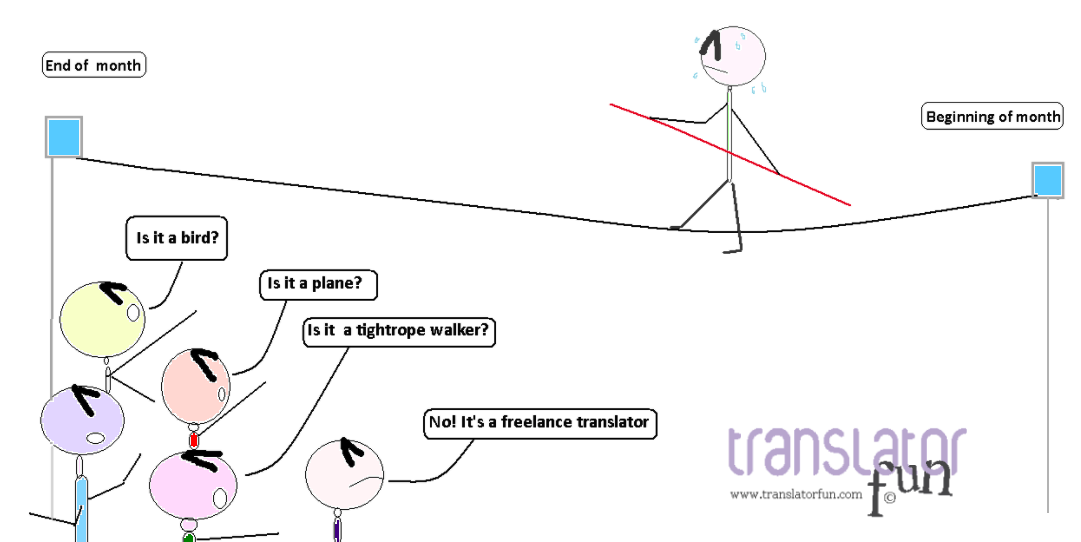
What’s your reaction to this drawing? Do you think it portrays a truth about freelancing and freelance translators and interpreters? Is it a myth? Share your opinion!

****

Do you like Translator Fun? Become a sponsor or show your support with a donation.

Are you making the best use of social media for your business?

Are you making the best use of social media for your business? -- click on the image to enlarge

Are you making the best use of social media for your business? -- click on the image to enlarge

Read this article in Spanish>>

A common perception of social networking sites is that they are good for socializing with friends, family, and strangers, “goofing around”, and not too much else. But social media and social networking sites (such as Twitter, Linkedin, Facebook, etc.) have been growing in popularity and utility for businesses for some time now. Many professionals are viewing these as tools, taking advantage of them, and using them to build their business. Freelance translators are no exception.

Some translators still seem reluctant when it comes to using social networks as a marketing tool for their businesses (see these ProZ.com‘s poll results from 2009 and 2010). Some are testing the waters, and others have already become adept at leveraging key networks with good results.

Social networking communities provide an opportunity for you to contribute your opinions, interests, and skills on the Internet. They can help you recover, maintain, and build your professional business network. Among the most frequently cited benefits of using social media as a marketing tool for your business are:

  • Enhancing your online visibility
  • Advertising your name, personal branding and/or services on the Internet
  • Detecting and utilizing information that can help you grow your business
  • Strengthening your relationships with clients
  • Building an online reputation
  • Reminding your clients that you exist
  • Distinguishing yourself from the rest (by adding/aggregating valuable content)
  • “Entering the dialogue and the 21st century”– not using the Web for networking and prospecting for business “leaves you in the cold”
  • Building up a defined and selected network of like-minded and skilled colleagues
  • Getting your comments and opinions about translation-related topics indexed on Google and other search engines (on Twitter this can be done through a careful selection of “hashtags” like #xl8,  #L10n , #languages)
  • Staying abreast of the latest news and trends in the industry

Other benefits of social networks include:

  • Knowing what your colleagues are up to and following their tips on, and experiences in, translation
  • Finding out about interesting industry blog posts (and promoting yours!)
  • Following the news from one place (as opposed to going to and browsing every site and/or blog on the topics in which you are interested)
  • Receiving help in real-time (Twitter is a good example of this)
  • and having fun

Of course, it is important to start on the right foot. Here are some tips that may help you have a pleasant online experience:

  1. Be clear on what you want to achieve for your business overall.
  2. Build a user profile that is a snapshot of your skills and of the services you offer (this is what your potential clients and colleagues will see). Keep your professional profile and the activity you engage in with that profile professional.
  3. Find out what is out there and invest your energy in the social sites and/or groups that reach your target market or networking needs.
  4. Define and know your criteria for accepting social connections with colleagues and clients and feel comfortable with it (compare the difference of adding a valued, professional connection to simply adding an unknown name to a list of contacts.)

And remember, social networks can be your diary, your address book, a daily newspaper, your online ad and more. It is up to you.

Note: I originally wrote and posted this article on Translator T. O. blog.

Useful links: