AI in the Translation Sector: Friend, Foe, or Secret Teammate?

[Sponsor’s guest post]

🤖 AI in the Translation Sector: Friend, Foe, or Secret Teammate?

The translation industry has always been a fascinating crossroads of language, culture, and technology. From the earliest days of bilingual dictionaries to the advent of machine translation, every new tool has reshaped the profession. Now, Artificial Intelligence (AI) is the latest player to step onto the stage—and it’s hard to ignore its impact.

🚀 The Rise of AI in Translation

With the rapid development of neural machine translation systems, AI has moved beyond clunky word-for-word renderings. Tools like DeepL, Google Translate, and countless custom-built engines can now produce surprisingly fluent drafts. For many, this feels like magic: input text on one side, receive a nearly publish-ready version on the other.

But is it really that simple? Not quite. AI can certainly speed up workflows, but it struggles with nuance, cultural sensitivity, and the highly specific requirements of certified or notarized translations. Anyone who has asked AI to handle a complex legal contract or a medical report knows it: the results can range from amusing to alarming.

🎭 Translators in the Age of AI

So, what does this mean for professional translators? Instead of pushing human experts aside, AI is becoming more of a teammate. Think of it as the enthusiastic intern: fast, eager, and tireless—but in desperate need of supervision.

Human translators bring what AI cannot replicate:

  • Contextual understanding (knowing when “bank” means a financial institution vs. the edge of a river).
  • Cultural sensitivity (catching idioms, humor, and subtle tones).
  • Legal and official accuracy (ensuring certified translations meet notarial and governmental standards).

In short, AI drafts, but translators perfect.

🏛️ When Machines Meet Ministries

One area where AI’s limits become crystal clear is in official translation and attestation. Governmental approvals, apostille procedures, and embassy verifications demand precision, certification, and human accountability. No AI-generated stamp is going to pass at the Ministry of Foreign Affairs.

Agencies like the Turkish Translation & Attestation Agency (TTAA) emphasize this balance beautifully. While technology assists in efficiency, it’s human expertise—and the trusted agency’s official seals—that guarantee documents are legally valid abroad.

😂 A Lighter Note

Let’s be honest: every translator has had at least one good laugh at AI’s expense. Some classics from community forums include:

  • “Marriage certificate” translated as “wedding coupon.”
  • “Seal of approval” rendered as “animal of applause.”
  • And the eternal favorite: mistranslations that read more like abstract poetry than legal text.

These moments remind us that while AI is impressive, it still has a long road before replacing the artistry of human translation.

🌍 Looking Ahead

The future isn’t about humans versus machines—it’s about collaboration. Translators who embrace AI as a productivity tool will thrive, freeing themselves from repetitive tasks and focusing on higher-value work. Clients, meanwhile, will continue to rely on professional translation agencies like TTAA for the gold standard: translations that are fast, accurate, and officially recognized worldwide.


Final Thought:
AI may speak in many tongues, but only human translators know how to listen between the lines.

*******

Become a sponsor or have your guest post featured.

Show your support of Translator Fun. Donate now.

Unveiling the Power of Certified Translations: A Guide for Businesses

[Guest Post]

In today’s interconnected global marketplace, effective communication is the key to success. For businesses navigating international waters, the importance of accurate and reliable translations cannot be overstated. This is where certified translations come into play, serving as the linchpin for seamless global interactions.

Understanding the Need for Certification:

Certified translations go beyond mere linguistic conversion; they bear the stamp of approval from a qualified professional attesting to their accuracy. This becomes especially crucial in legal, business, and official documentation where precision is paramount. From contracts and patents to regulatory filings, the consequences of inaccuracies can be far-reaching.

Ensuring Accuracy in Global Ventures:

Imagine the scenario: your company is on the verge of a major international deal, and contracts are being translated. A slight error in translation could lead to misunderstandings, legal complications, and financial losses. Certified translations act as a safety net, providing businesses the assurance that their documents are accurately translated and free from any errors that could jeopardize their ventures.

Navigating Regulatory Compliance:

Different countries have distinct regulatory requirements, and compliance is non-negotiable. Whether you’re expanding your business overseas or dealing with international clients, certified translations ensure that your documents meet the necessary legal standards. This is particularly crucial in industries such as healthcare, finance, and law, where the stakes are high, and adherence to regulations is paramount.

Global Expansion Made Seamless:

For businesses eyeing global expansion, language barriers are a common stumbling block. Certified translations pave the way for a smoother expansion process by ensuring that your marketing materials, product documentation, and other business collateral are accurately translated while maintaining the intended message and brand integrity.

Conclusion:

As businesses continue to explore new horizons, the power of certified translations emerges as a critical factor in their success. By investing in professional translation services backed by certifications, businesses can unlock the full potential of global collaboration, confident that their messages are accurately conveyed across linguistic and cultural boundaries.

******

Do you like Translator Fun? Become a sponsor or have your guest post featured.

Main differences between translators and interpreters

Differences between translators and interpreters

Translators and interpreters need different skills

See this cartoon in Spanish

Buy Now Button Purchase code TIN1

Hi there. This is the first cartoon in the series about the main differences between translators and interpreters at a glance. Although many times most people use the term “translator” to refer to both professions, these two disciplines require a different set of skills and different types of training, too. I would also say that they require different types of personalities, but we’ll leave that for a future post.

As shown in the cartoon, the first and huge difference resides in the medium of expression as translators work with written texts and interpreters with spoken utterances.

What is your reaction when people mistake these two terms for one another?

Buy this card and use it to illustrate your blog post, article, or lesson.

Buy Now Button Purchase code TIN1 (once you buy it you will receive it in your inbox with no watermarks).

Do you like Translator Fun? Become a sponsor and subscribe to Translator Fun’s YouTube channel

Translator Fun en español. Traducción pública: formato y formalidades


Buenas prácticas para traductores. Traducción pública. Formato y formalidades. Reglamento de legalización del CTPCBA.

Subscribe to Translator Fun’s YouTube channel here.

Become a sponsor

A translator’s dilemma: what to do with an unintelligible source text

A translator's good and evil thoughts

A translator is faced with a dilemma


Do you like Translator Fun? Subscribe to Translator Fun’s YouTube channel

Buy this cartoon 
Buy Now Button
Purchase code A3

Become a sponsor


Translators: assignments they hate

Click on the image to enlarge

Some phrases will get on translators’ nerves

Some translation clients ask for assignments that are impossible to complete by a single translator in real-time.

Buy this cartoon 
Buy Now Button
Purchase code B6

Do you like Translator Fun? Become a sponsor or show your support with a donation.

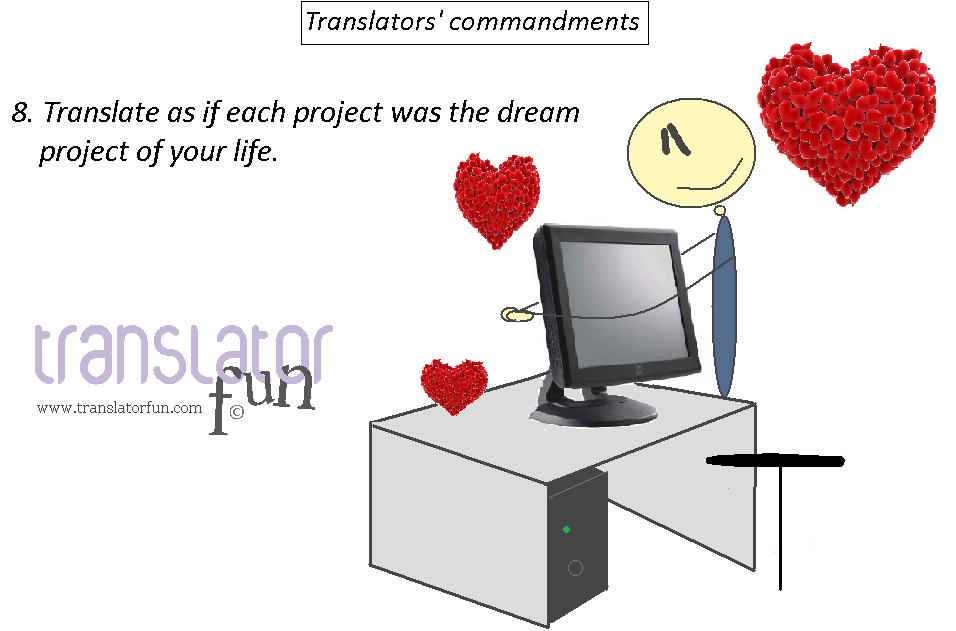
Translators’ commandments: Translate as if each project was the dream project of your life

Translators' commandments: Translate as if each project was the dream project of your life.  (click on the image to enlarge)

Translators’ commandments: Translate as if each project was the dream project of your life. (click on the image to enlarge)

Do you enjoy Translator Fun?

Buy this cartoon 
Buy Now Button
Purchase code C4

Become a sponsor

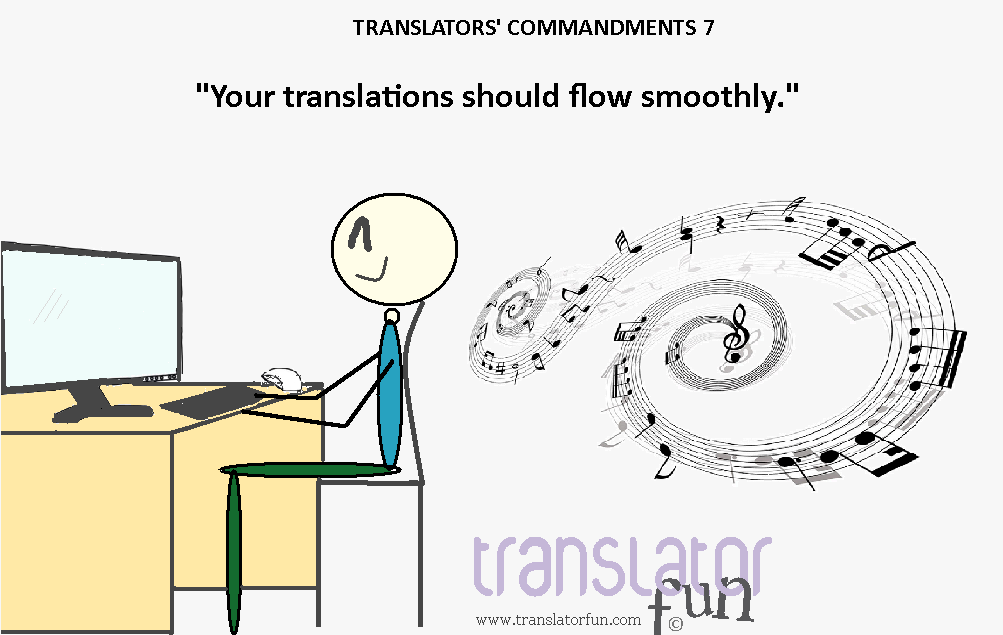
Translators’ commandments #7 – “Your translations should flow smoothly”

"Your translation should flow smoothly" (click on the image to enlarge)

“Your translation should flow smoothly” (click on the image to enlarge)

Also in this series:

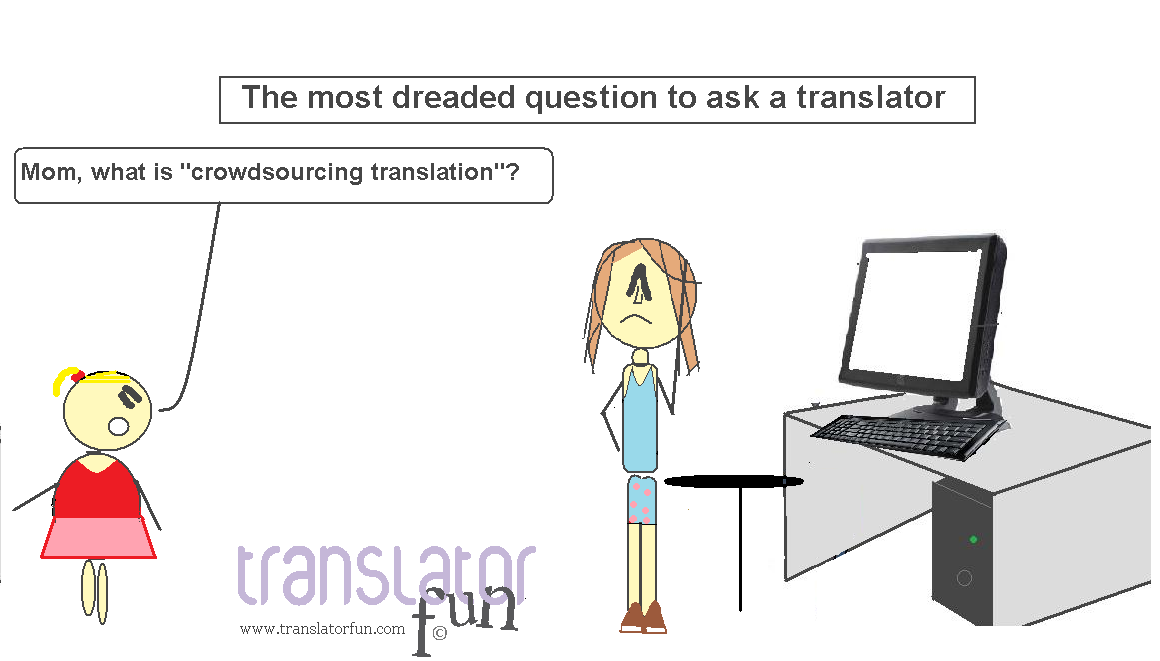
The most dreaded question to ask a translator

The most dreaded question to ask a translator -- click on the image to enlarge

The most dreaded question to ask a translator — click on the image to enlarge

Do you like Translator Fun?

Buy this cartoon 
Buy Now Button
Purchase code: D2

Become a sponsor

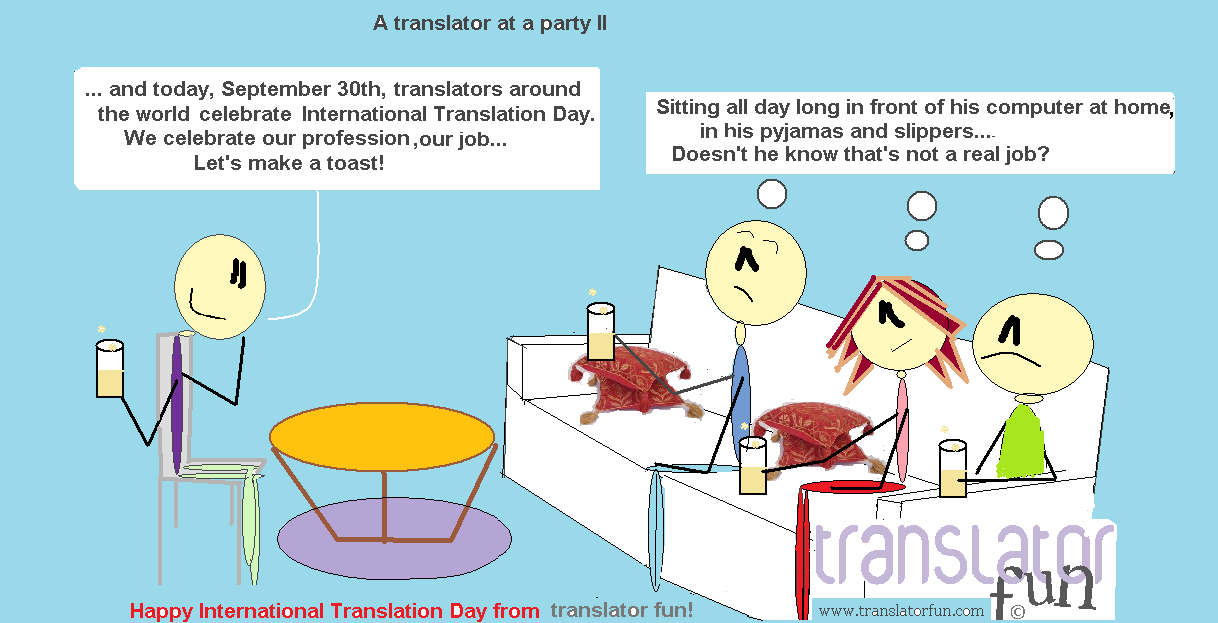
A translator at a party II (International Translation Day)

Click on the image to enlarge it. Also, see this cartoon in Spanish

Do you like Translator Fun?

Buy this cartoon 
Buy Now Button
Purchase code: E8

Become a sponsor

On International Translation Day (September 30th) I’d like to wish all my colleagues a wonderful day. This cartoon depicts a common attitude many non-translators have towards our profession. On the other hand, this article by Nataly Kelly published on the Huffington Post highlights the important role translators play in today’s world by listing 10 Ways Translation Shapes Your Life.

To all my colleagues out there: Happy International Translation Day!

Translator Fun

Translator Fun is on Instagram

*************************

Do you enjoy Translator Fun? Become a sponsor.