Free Tools for Translators: Choose Your Favorite Panda

Panda logo
free tools for translators

Today I wanted to introduce you to a handy set of simple and useful tools created by Rafael López Sánchez, a fellow translator who loves pandas. These tools are designed to make your daily work easier. They’re completely free, require no installation, and work directly in your browser.

Below is a list of them with brief descriptions.

poanda: a simple tool for editing .po files.

pandaterm: a simple TBX/CSu glossary editor.

pandoria: a simple tool to edit and align translation memories.

subpandaASS: your tool for creating subtitles.

subpandaTM: a tool for editing and translating subtitles. Import an .srt file and a video to start working. If you wish, you can work with a TMX translation memory and a TBX glossary, which you can import or create from scratch.

supandaAUTO: AI-powered automatic transcription and subtitling tool.

subpandaQA: una potente herramienta para detectar errores en archivos de subtítulos SRT con estilo.

pandascript: a powerful tool to detect errors in SRT subtitle files with style.

diffpanda: a tool to compare texts and generate change reports quickly and easily.

pandatimer: a tool for managing your time easily.

charpanda: a simple free app for counting characters.

calpanda: a free tool for generating invoices.

In addition, through traduversia, Rafa offers a free course with unlimited access to learn how to use each tool in more detail. You can sign up for the course here.

No excuses! I’ve already signed up.

See you there.


Do you like Translator Fun? Become a sponsor or have your guest post featured.

Signs for translators: love quotes

Sings for translators: love your CAT tool

Signs for translators: love your CAT tool #lovequotes

Buy Now Button Purchase code: A16

Become a sponsor

All the cartoons on this blog are the exclusive property of Translator Fun. Learn how to get this cartoon.

Subscribe to Translator Fun’s YouTube channel here


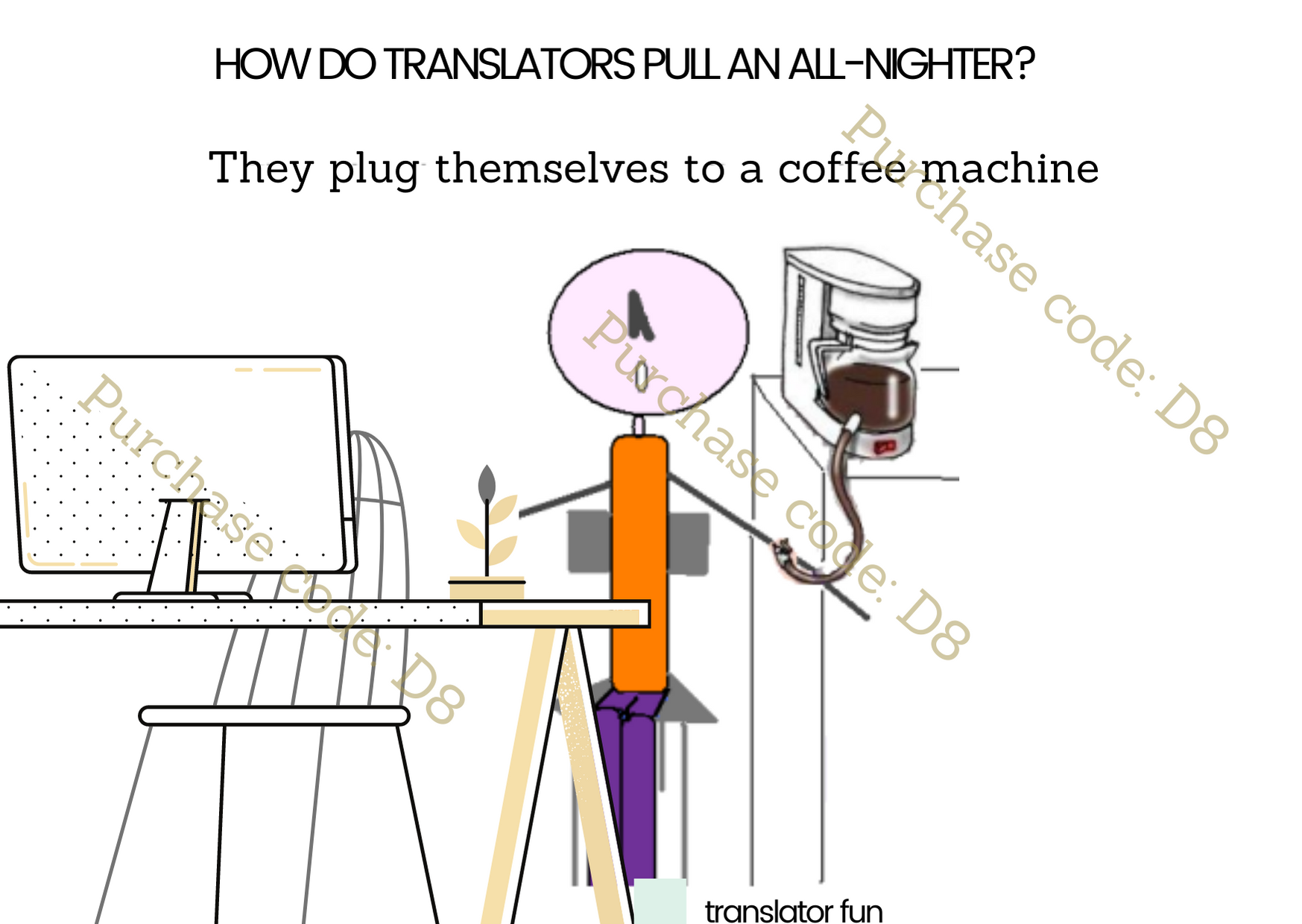
How do translators pull an all-nighter?

A translator pulls an all-nighter

How does a translator pull an all-nighter?


Buy Now Button Purchase code: D8

Do you like Translator Fun? Become a sponsor

Productivity for translators — CAT

translator with cat

A translator with a cat on her lap

See the animated cartoon for this post on You Tube

Buy Now Button Purchase code: E21

*******

Do you like Translator Fun? You can become a sponsor or have your guest post featured.

Translator’s lifestyle — “sleep on it!”

Buy this cartoon 
Buy Now Button
Purchase code: E22

*****

Do you like Translator Fun? Become a sponsor or show your support with a donation.

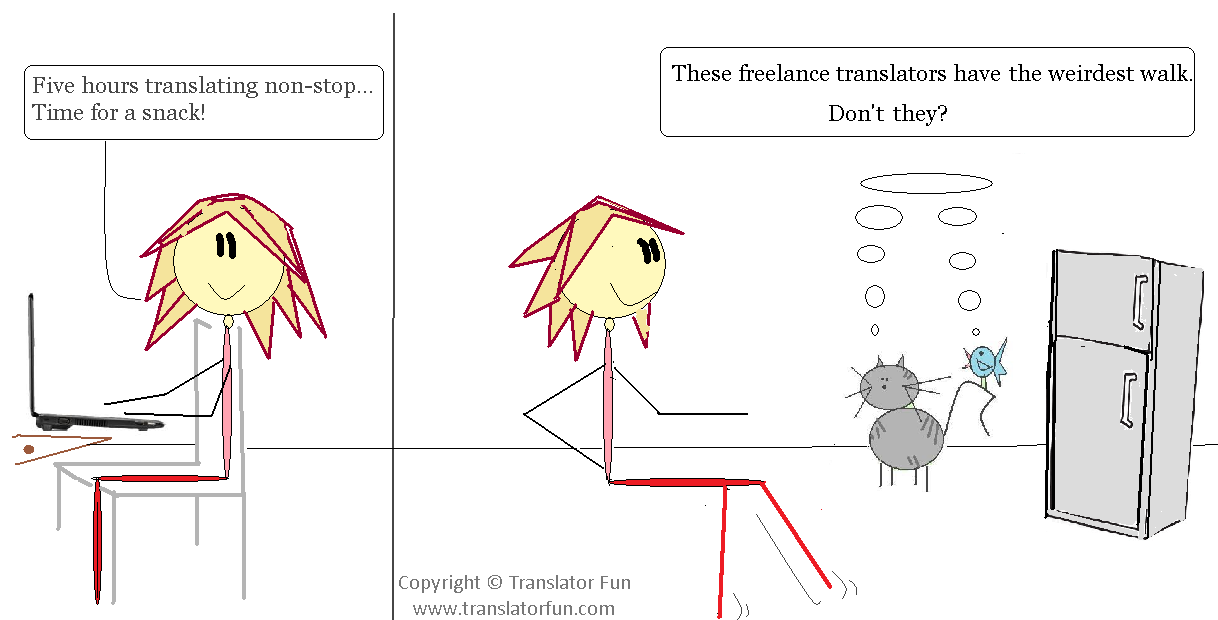
Translators’ walk

Buy this cartoon 
Buy Now Button
Purchase code: E23

*****

Do you like Translator Fun? Become a sponsor or show your support with a donation.

Productivity for translators: work environment and set up

Productivity for translators -- click on the image to enlarge

What type of chair do you use at work?

More cartoons about MT:

Related articles:

Translator’s productivity (part 3) — “TEnTs”

Translator’s productivity (part 3) — "TEnTs" (click on the image to enlarge)

Also see:

“You may have never heard before of the term “Translation Environment tool”. It is a fairly new term, coined as the result of frustration over other names. In the past, the tools we are talking about have been called “Translation Memory” software and “Computer Aided Translation” tools (CAT). But while the first name only paid tribute to one of the many functions in the package, the second one seems a bit bulky and makes it sound like the tool is doing all the work. As we will see, the term “Translation Environment tool” is spot on.

What it does

A good Translation Environment tool supports every role and stage in the translation process. Typically there are seven stages:

  • file preparation
  • content segmentation and indexing
  • database retrieval and translation
  • editing
  • quality assurance
  • database update
  • generation of the translated file.”

Source: Lingo 24 > Translation Resources 

According to a ProZ.com quick poll featured on 22 March 2010, over 50 % of  the translators who responded the poll had not heard the term “TEnT” before.

What about you? Are you familiar with this term? Do you use it?

Here are some links related to Translation Environment Tools (TEnTs):

Translator’s productivity (part 2) — shortcuts

Translator's Productivity --shortcuts (click on the image to enlarge)Translator’s productivity — shortcuts (click on the image to enlarge)

Also see:


“In computing, a keyboard shortcut is a sequence or combination of keystrokes on a computer keyboard which invokes commands in software. Some keyboard shortcuts require the user to press a single key or a sequence of keys one after the other. Other keyboard shortcuts require pressing and holding several keys simultaneously.” Wikipedia

Using shortcuts in your work will undoubtedly help you become more productive. At first it requires a conscious effort to start using them and remember them but with time their use becomes a reflex.

I have adopted a few which I use on a daily basis. However, I’d like to start using some more as they help me optimize my time and increase my productivity.

Below there is a list of links to useful articles with detailed examples of existing keyboard shortcuts that you can easily start using in your daily computing tasks:

What about you? Which shortcuts do you use?

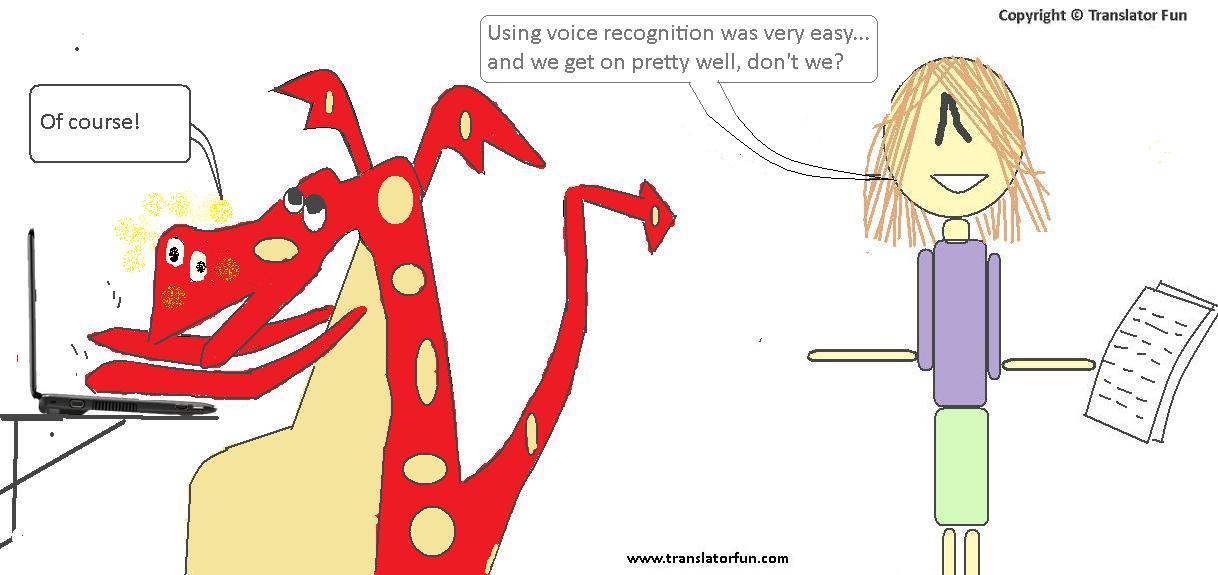
Translator’s productivity (part 1): voice recognition tools

Productivity: voice recognition -- click on the image to enlarge

Translator's productivity: voice recognition -- click on the image to enlarge

See this cartoon in Spanish and in French

See more cartoons in this series: